

-
Battery ESSMaximize the value of renewables and energy storage by much safer and more professional products.
-
C&I SolutionsLaying the efficient, flexible and economical "smart energy sponge" with energy storage technology to realize green energy to flow on demand.
-
Technology & ServicePursuing a new energy world driven by technological innovation in the electricity and IoT.
-
About VilionIndependent R&D, system integration, software development, O&M and dismantling&recycling, Vilion is a full life cycle partner.
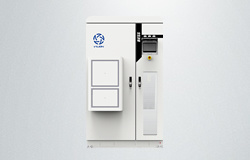
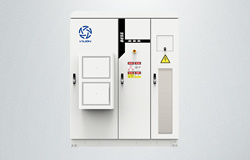
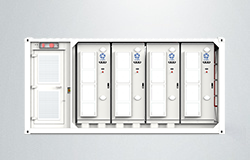
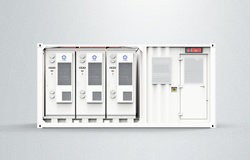







Energy Storage Knowledge Class | Integrated PV System + BESS + Charging
2024-05-27
Preface
Transportation is the lifeline of modern cities. According to EVTank data, global sales of new energy vehicles reached 14.65 million units in 2023, representing a year-on-year increase of 35.4%. Among them, China's sales of new energy vehicles reached 9.495 million units, accounting for 64.8% of global sales. The United States and Europe saw annual sales of new energy vehicles in 2023 at 2.948 million units and 1.468 million units respectively, with year-on-year growth rates of 18.3% and 48.0% respectively. Looking ahead, EVTank predicts that global sales of new energy vehicles will reach 18.3 million units in 2024 and 47 million units by 2030.
The rapid growth in sales of new energy vehicles will inevitably lead to a surge in demand for charging stations, posing significant challenges to the power grid. At this juncture, the participating of energy storage systems will help achieve capacity expansion and balance supply and demand on the grid at low costs. Thanks to the urgent need for countries to develop low-carbon economies, and tax incentives and subsidies for the purchase of new energy vehicles, the demand and sales of new energy vehicles are expected to continue to grow rapidly in the future. The Integrated PV System + BESS + Charging presents enormous market opportunities in the energy storage industry.
Q: What is Integrated PV System + BESS + Charging ?
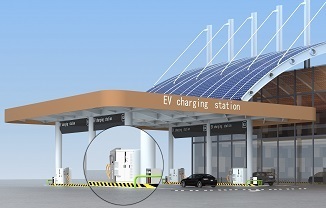
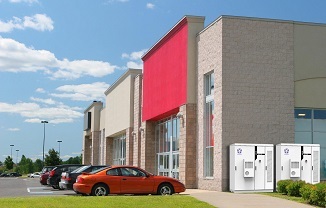
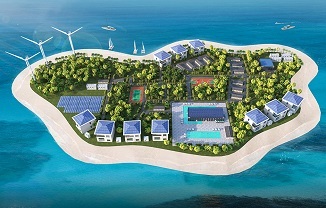
A: Integrated PV System + BESS + Charging, as the name suggests, is a green charging mode that coordinates photovoltaic systems, energy storage systems, and electric vehicle charging services to support each other. This solution is suitable for high-energy-consuming industries such as public office buildings, commercial centers, industrial parks, residential communities, and highways. By storing and optimizing energy, it achieves flexible capacity expansion and basic balance between local energy production and energy consumption load. The BESS can interact flexibly with the utility grid as needed and operate relatively independently, prioritizing the use of solar energy to alleviate the impact of charging station electricity on the grid. In terms of energy consumption, directly using energy storage batteries to charge vehicle power batteries improves energy conversion efficiency.

Integrated PV System + BESS + Charging Diagram
Q: What is the role of energy storage in Integrated PV System + BESS + Charging ?
A: The role of energy storage is multifaceted. Firstly, it helps to increase the utilization of photovoltaic energy by storing surplus electricity generated during the day for use at night. Secondly, the BESS is charged during off-peak electricity consumption periods and discharges during peak consumption periods, reducing the load difference between them, thereby achieving peak-load shifting. Consequently, this can reduce the impact on the grid. Lastly, during power outages period, the BESS can operate off-grid, serving as an emergency backup power.

Vilion-Intelligent Charging Service Strategy
Q: The benefits of Integrated PV System + BESS + Charging include:
A: 1. Directly capacity expansion: Reduce expansion investment and waiting time.
2. Maximize the utilization of photovoltaics by integrating them.
3. Reduce demand capacity costs.
4. Rapidly increase the number of charging piles.
5. Peak-valley arbitrage.
6. Off-grid backup power.
Exciting New Product Launch Coming Soon!
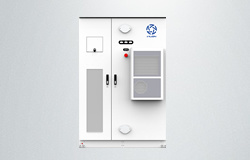
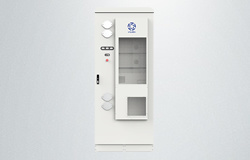
EnerCharge Integrated Outdoor Battery&Charging Cabinet
– Stay tuned for more details!
MORE NEWS

2026-10-08
Choosing the Right Energy Storage System for Your Devices: A Comprehensive Guide

2026-10-06
Harnessing the Future: Understanding Containerized Battery Energy Storage Systems

2026-10-04
The Synergy of Renewable Energy and Battery Energy Storage Systems: Unlocking a Sustainable Future

2026-10-02
Unlocking the Future: The Importance of High Power Battery Storage in Consumer Electronics
CONTACT US
Vilion (Shenzhen) New Energy Technology Co., Ltd
Add: Tower A, Building 1, Duocai Silicon Valley, No. 8 Juhe Road, Pingshan District, Shenzhen, China
Vilion Tech B. V.
Add: Fascinatio Boulevard 216 Unit 220, 3065WB Rotterdam
Vilion Tech (UK) Ltd
Add: Office 303B 10 Courtenay Rd., East Lane Business Park, Wembley, United Kingdom HA9 7ND


Copyright©2024 Vilion (Shenzhen) New Energy Technology Co., Ltd