

-
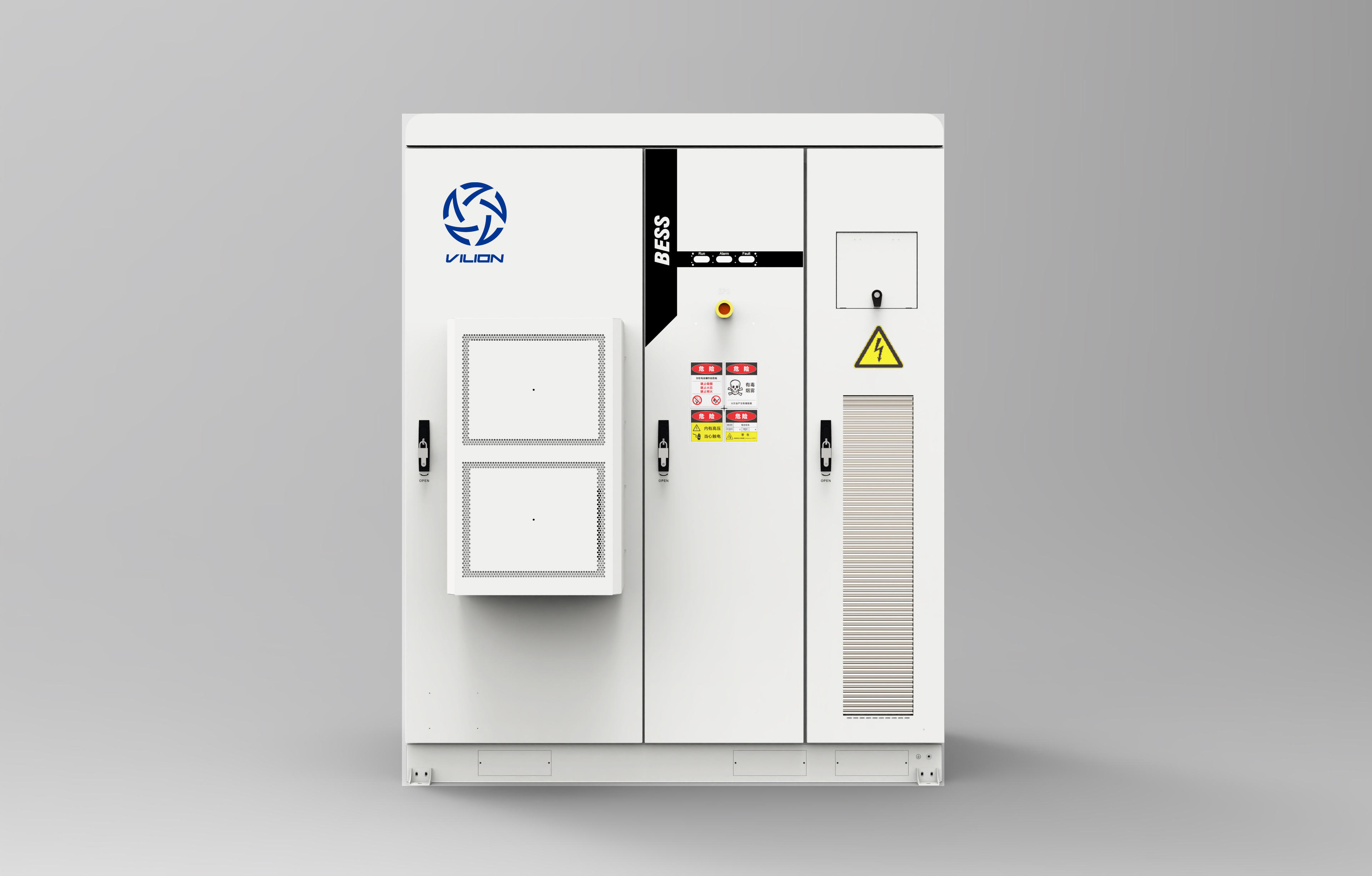
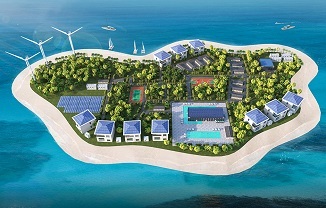
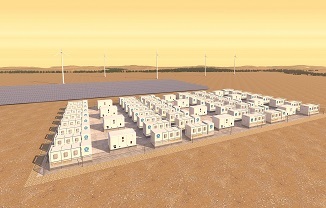
Battery ESSMaximize the value of renewables and energy storage by much safer and more professional products.
-
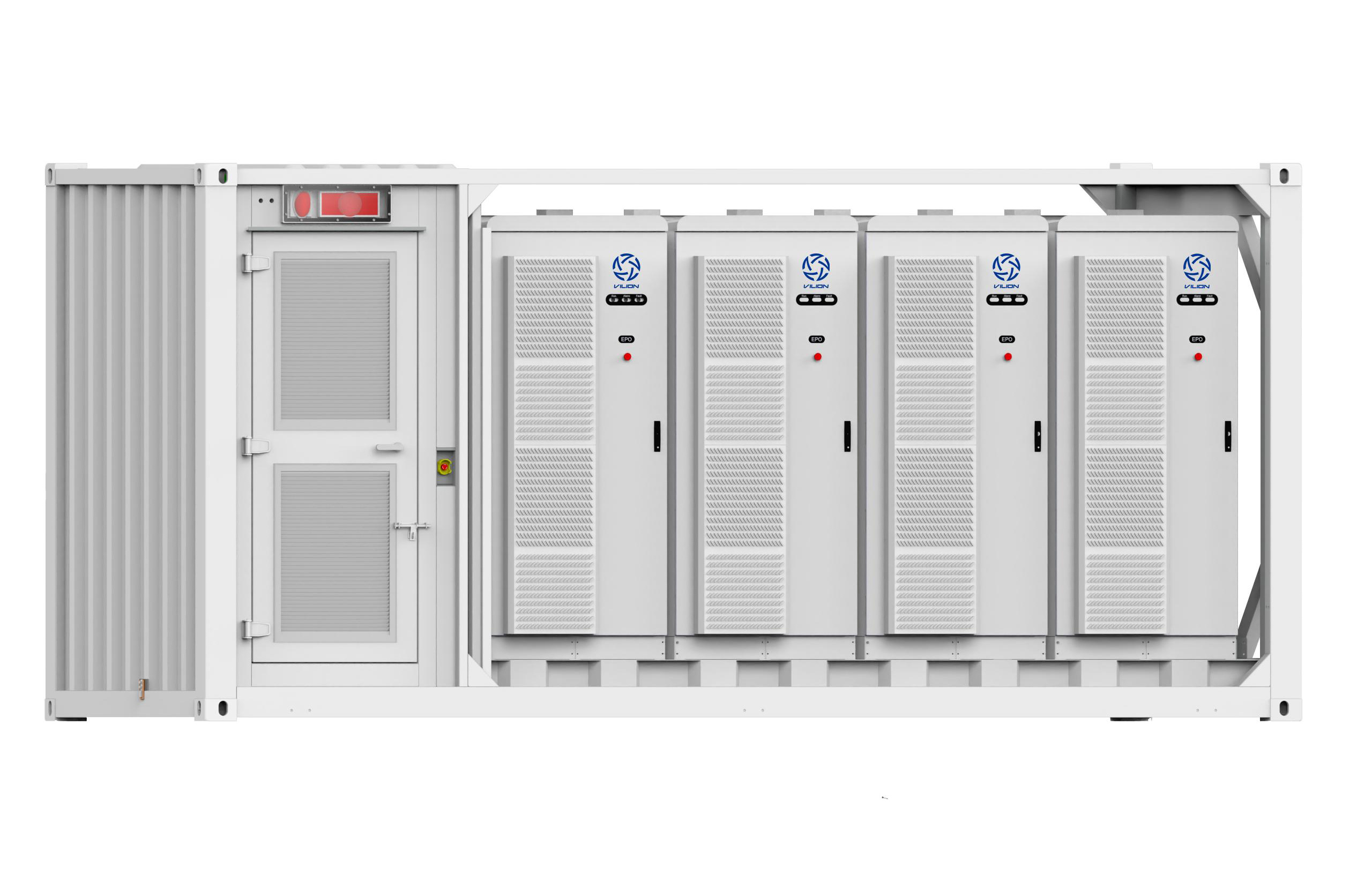
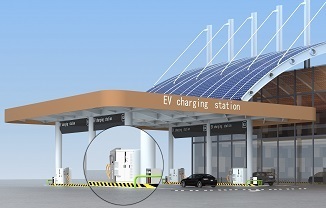
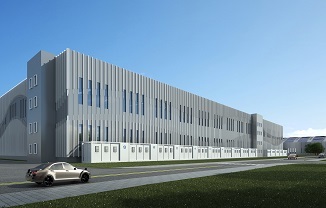
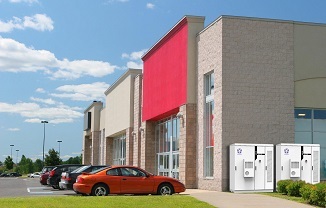
C&I SolutionsLaying the efficient, flexible and economical "smart energy sponge" with energy storage technology to realize green energy to flow on demand.
-
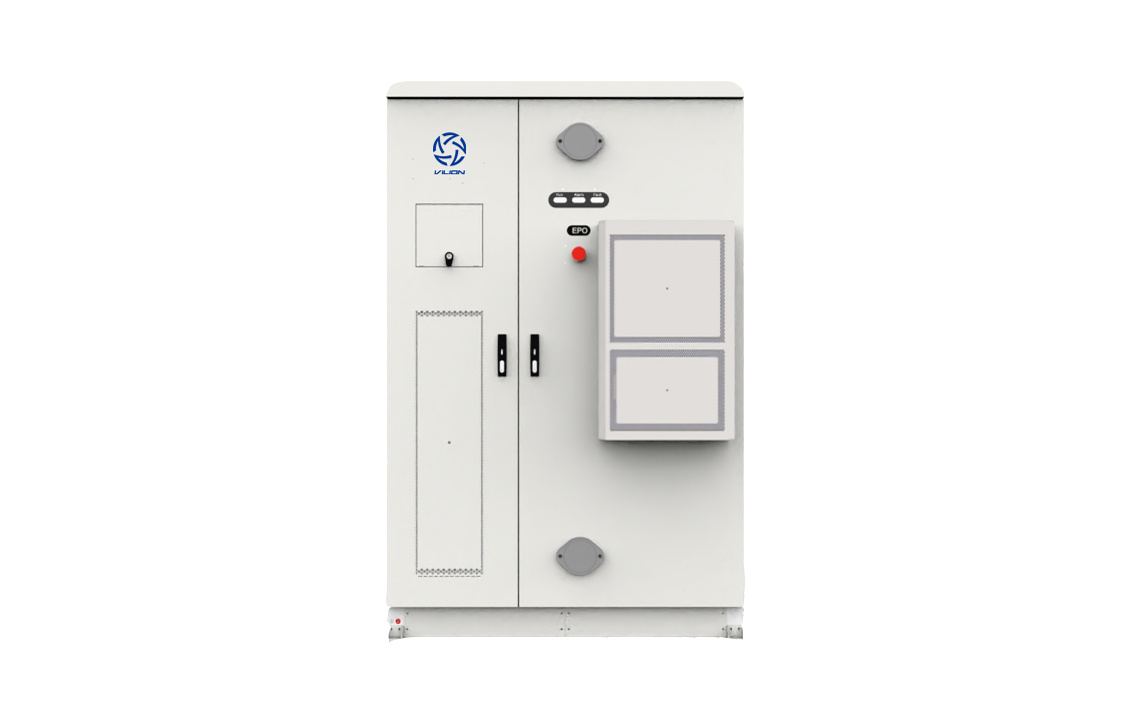
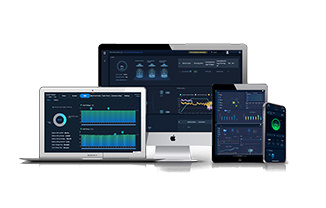
Technology & ServicePursuing a new energy world driven by technological innovation in the electricity and IoT.
-
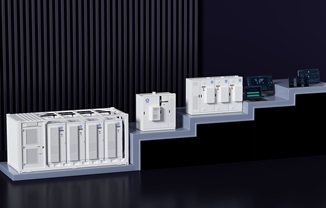
About VilionIndependent R&D, system integration, software development, O&M and dismantling&recycling, Vilion is a full life cycle partner.






2024-02-08
Set Sail for the New Journey, ENEX-Poland 2024——Vilion's First Exhibition of the New Year
On February 7-8, the 26th International Power Industry and Renewable Sources of Energy Fair ENEX was held at the Targi Kielce, Poland. It is the most influential renewable energy exhibition in Poland, supported by government departments such as the Polish Ministry of Energy.
Due to the Russia-Ukraine conflict, Europe has been plunged into an energy crisis. Poland, located in the central part of the European continent, is actively promoting energy transition in response to this crisis. In recent years, there has been a significant increase in the installed capacity of solar systems in Poland, leading to a corresponding increase in demand for solar energy storage solutions. Taking into account the local C&I energy storage applications and market demands in Poland, Vilion has unveiled its Ener series of C&I energy storage products and cutting-edge solutions at the ENEX-Poland 2024 in Kielce, Poland. This initiative aims to engage with numerous peers and customers there to explore the application and innovation of battery energy storage technology in the renewable energy sector, thereby facilitating Poland's energy transition.
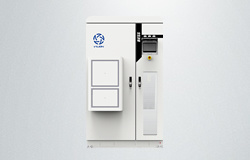
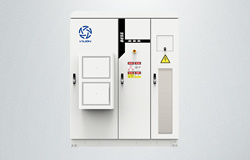
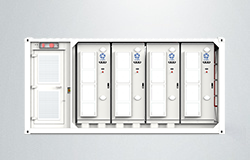
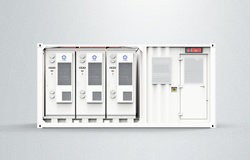
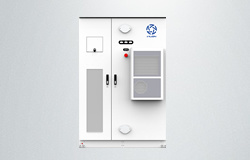
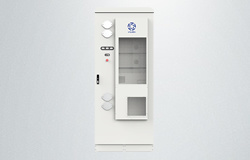
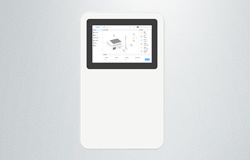
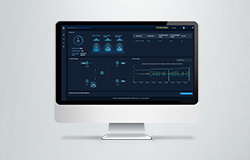
During the exhibition, Vilion's Ener series of C&I energy storage product models attracted numerous visitors and engaged in discussions. The EnerCube containerized battery energy storage system, EnerArk integrated outdoor battery energy storage cabinet, EnerGeo integrated outdoor battery energy storage cabinet, and ViStarter edge energy management system (EMS) constitute a comprehensive "hardware + software" integrated solution covering multiple power levels, capacities ranges, and application scenarios. The newly showcased product at this exhibition, EnerGeo, features 1C charging and discharging capabilities along with DC coupling with solar systems and EV chargers. It aims to provide reliable energy supply for all fixed loads in the C&I sectors. Through interfaces with control units, it can flexibly configure various applications. Multiple battery cabinets can also be connected in parallel to form a large-scale energy storage solution. The engineers from Vilion attentively listened to the energy storage needs of visitors who approached them for consultation at the exhibition and provided detailed explanations of the product features and functionalities, actively scheduling post-exhibition visits with interested clients for more in-depth technical discussions.
Since its inception, Vilion has remained dedicated to the research, development, and application of C&I battery energy storage technology. Its founder and research team have been deeply involved in the field of energy storage for over a decade. Vilion team is committed to leveraging technological innovation and professional services to create high-quality, safer, and more cost-effective C&I battery energy storage products for clients and strives to contribute to global energy transition and the sustainable development of the energy sector.

2024-02-04
Vilion 2MW/4MWh EnerCube 2.0 Containerized Battery Energy Storage System Shipped to the UK
On January 26, 2024, four sets of 1075kWh EnerCube 2.0 containerized battery energy storage system shipped to the UK.
The new modularized design adopted by EnerCube 2.0 containerized BESS can cut the lead time by half of the traditional structure. Its modular O&M function without interference in the normal operation of other modules while a single module failure has also significantly promoted cost savings and utilizatian optimizing.
The 2MW/4MWh solar + storage project is located in a research institute building in Coventry, UK, which is the largest user-side C&I energy storage project in the UK. The integrated solar + storage solution designed by Vilion for the building includes four sets of EnerCube2.0, which will be connected to the local 2MWp solar system, and effectively help the building achieve comprehensive energy allocation, improve the efficiency of solar utilization and realize stable and sustainable green power supply.

2024-01-31
Vilion's Integrated Outdoor Battery Energy Storage Cabinets have been Shipped to Spain and Sweden
On January 29, 2024, four integrated outdoor battery energy storage cabinets from Vilion were shipped to two overseas destinations. Among them, two units of the 107kWh EnerArk-M were sent to Spain, while the other two units of the 215kWh EnerArk were dispatched to Sweden.
The EnerArk series integrated outdoor battery energy storage cabinets integrate battery modules, control systems, fire protection systems, temperature control systems, and other components into a one-stop solution, achieving efficient charge and discharge through the collaborative operation of its various components. This energy storage cabinet adopts a modular design, supporting parallel expansion with multiple units. It is characterized by a plug-and-play feature, facilitating transportation, installation, and maintenance.
The dispatched integrated outdoor battery energy storage cabinets for Spain and Sweden will serve as the frequency regulation units and these systems will operate in on-grid mode, subject to the local controller dispatch from the customers.

2024-01-26
Application of Solar + Battery Energy Storage System in Thailand
Project site in Thailand | Vilion, based on a detailed understanding of energy storage, solar systems, the power grid, and customer requirements, provided a solution involving the EnerBC energy storage battery cabinet AC coupled with the customer's 150 kWp solar system.
EnerBC integrated with the existing 100 kW Power Conversion System (PCS) by matching communication protocols, and is managed by an Energy Management System (EMS) for comprehensive energy scheduling and management of the solar + energy storage system.
This integration helps improve the self-consumption efficiency of solar system, meets peak shaving requirements, optimizes time-of-use pricing strategies, and serves as the backup power.
As a result, customer achieves easy power management, promote green production, and comprehensively reduce electricity costs.

2024-01-25
"Overcoming Challenges, Accumulating Strength for Takeoff", Vilion 2023 Year-end Banquet Successfully Concluded!
On January 20, 2024, Vilion held its year-end banquet with the theme "Overcoming Challenges, Accumulating Strength for Takeoff" at the Pingshan Innovation Hub in Shenzhen.General Manager Mr. Shawn Song, along with co-founders and all Vilion members, enjoyed the time together!
The banquet commenced with a year-end address from General Manager Mr. Shawn Song. Shawn first conducted a thorough analvsis of the C&l energy storage market in 2023 and summarized that, at present, although the competition of domestic and international markets is becoming increasingly challenging, and the homogenization of C&I battery energy storage products is serious, which has brought many challenges to Vilion, in the past year, Vilion stood out with superior product quality and achieved significant accomplishments. In 2023, Vilion not only successfully completed domestic deliveries and applications but also successfully implemented projects worldwide, including in the United Kingdom, Sweden, Malaysia, Germany, South Africa, the Netherlands, Thailand, etc.. This global success garnered affirmation from customers in both domestic and overseas.
During the event, Mr. Shawn Song, on behalf of the company, expressed appreciation for the dedicated efforts of domestic and international marketing teams over the past year, as well as the diligent work of the R&D and delivery teams. Additionally, Shawn made a comprehensive analysis and summary of the company's overall performance throughout the year. He extended encouragement to all employees to keep forging ahead in 2024, particularly, he urged the marketing teams to maintain strong connections with key clients, clarify the implementation of work in key domestic and international markets, and keep promoting the sales performance.
Lastly, on behalf of the company, Mr. Shawn Song extended his best wishes to all Vilion members, wishing them a prosperous Year of the Dragon and good health.
The year-end banquet included a dedicated game and lottery segment. Amidst laughter and joy, each prize found its rightful owner. In addition to the predetermined company prizes, senior leaders spontaneously added a lucky draw of cash prizes, which made the entire event reached its climaxed!
With the finish of the game lottery segment, Vilion's "Overcoming Challenges, Accumulating Strength for Takeoff" year-end banquet came to a close. Looking back, in 2023, Vilion accomplished a Pre-A round financing of tens of millions Yuan, realized the official operation of a new intelligent manufacturing facility with a capacity of 500MWh, and achieved a marketing performance that more than doubled compared to 2022. These achievements belong to every one of the Vilion.
Looking forward, in 2024, Vilion will continue to strive towards the goal of becoming a leading C&I battery energy storage service provider. Upholding its original mission and forging ahead, Vilion aims to drive energy transformation and sustainable development through the innovative battery storage technologies.

2024-01-16
Vilion Was Honored as the "Outstanding Enterprise of the Year 2023" by the Guangdong Solar Energy Association
On January 10th to 11th, 2024, the "2023 Guangdong Solar Energy Industry Development Summary Conference & the 2023 Guangdong International Photovoltaic Science and Technology Academic Conference," jointly organized by the Guangdong Solar Energy Association, the Guangzhou Institute of Energy Conversion, Chinese Academy of Sciences, Sun Yat-sen University, South China University of Technology, Jinan University, and Southern University of Science and Technology, was held at the Hilton Yilin Hotel in Guangzhou and Vilion was invited to attend the conference.
On the evening of the 10th, during the recognition session of the conference, Vilion was honored as the "Outstanding Enterprise of the Year 2023" for its innovations and breakthroughs in the C&I battery energy storage technology and solutions.
Against the "2030 Peak Carbon Emissions and 2060 Carbon Neutrality" goals, the energy storage sector is becoming increasingly prominent. With the continuous widening of peak-to-valley electricity price differentials in many provinces and cities of China, the economic viability of C&I energy storage is also increasing. As one of the earliest pioneers dedicated to the research and application of C&I battery energy storage technology, Vilion strives to collaborate with the entire energy storage industry chain and is committed to researching the latest, more secure and economical energy storage solutions, continually iterating and updating to deliver better C&I battery energy storage products and services.
The award of the "Outstanding Enterprise of the Year 2023" is a recognition of Vilion's progress and contributions in the new energy industry in 2023. It is also a significant encouragement for Vilion to pursue the further achievements in 2024. Vilion will continue focusing on the battery energy storage technology, to build an efficient, flexible, and economical "smart energy sponge" and let the green energy flow with demand!

2024-01-10
Energy Flowing with Demand | 「Vilion」Secured Millions of Dollars in Pre-A Round Financing
Recently, Vilion (Shenzhen) New Energy Technology Co., Ltd. (hereinafter referred to as "Vilion") has completed a pre-A round financing of millions of dollars, exclusively funded ZWC Partners. The fun

2024-01-07
Focusing on Energy Storage Systems - Forced Air Cooling Technology VS Liquid Cooling Technology (Part 2)
Previously:
Due to the thermal characteristics of batteries, thermal management has become a critical component in the electrochemical energy storage industry chain. Breaking down the value distribution within the industry chain, the cost of batteries in energy storage systems accounts for approximately 55%, PCS accounts for about 20%, BMS and EMS together make up about 11%, while thermal management constitutes about 2%-4%. Although the proportion of thermal management in terms of value is relatively low, it plays a crucial role in ensuring the continuous and safe operation of energy storage systems.
Currently, there are two main mainstream solutions for thermal management technology in energy storage systems, namely forced air cooling system and liquid cooling system. This article will be divided into two parts to provide a comparative analysis of these two cooling systems in terms of lifespan, temperature control, energy consumption, design complexity, space utilization, noise, production & installation, after-sales, operation and maintenance, and cost.
The Part 2 mainly makes a comparative analysis on 5 aspects of noise, production and installation, after-sales, operation and cost.
In the Part 2, a comprehensive comparative analysis will be conducted across five key areas: noise, production & installation, after-sales service, operation & maintenance, and costs.
Explanation of nouns
Thermal management technology: Including forced air cooling, liquid cooling, heat pipe cooling, and phase-change cooling, with the last two still in the experimental stage.
Forced air cooling: The main components of the air cooling system include air conditioning, air ducts, and module fans. The fans are installed at the front of the module. The module fans dissipate the heat generated by the module's internal cores and carry it out to the prefabricated cabin air duct. The air conditioning system inside the prefabricated cabin dissipates heat through convective heat transfer.
Liquid cooling: Liquid cooling system refers to the use of liquid as a heat-conducting medium, transferring heat directly or indirectly by coming into contact with cooling liquid and heat-generating components. It is a heat dissipation technique that removes the heat generated by the heat-generating components.
Chapter Six: Noise comparison
1. System noise comparison of similar manufacturers
2. Comparison of measured noise
Measured noise data of EnerArk in laboratory: 71.8dB at position 1, 68.1dB at position 2, 67.9dB at position 3 and 69dB at position 4;
Field noise measured data at customer A's project site: Maximum 72.8 dB.
(1)The main noise source of forced air cooling: PCS < 75dB, fan < 60dB, air conditioner < 65dB;
Liquid cooling main noise source: PCS < 75dB, liquid cooling unit < 75dB;
(2)There is no obvious advantage in the noise comparison of liquid-cooled and forced air-cooled products, and the basic noise is less than 75dB.
Chapter Seven: Production & installation comparison
2. Comparison & analysis of forced air cooling VS liquid cooling in production and installation:
Liquid cooling is more complex than the forced air cooling in production and installation, and the overall installation work requires more time than air cooling system.
Chapter Eight: After-sales service comparison
1. Comparison & analysis of fault points for the forced air cooling VS liquid cooling:
2. Comparison & analysis of failure points for the forced air cooling VS liquid cooling:
3. The difference of battery PACK after-sales service:
(1) Regarding the after-sales service of the battery PACK, the workload, the number of tasks, and the difficulty of the steps for forced air cooling differ significantly from the liquid cooling system, with the forced air cooling presenting a clear advantage.
(2) Preliminary estimates indicate that, excluding the battery PACK component, the disassembly and assembly time for air-cooled battery PACK is within 20 minutes, while the time control for disassembly and assembly of liquid-cooled battery PACK is set at 2h+.
Chapter Nine: Operation & maintenance comparison
1. Forced air cooling and liquid cooling system maintenance contents and cycle:
(1) The maintenance workload for the forced air cooling system is relatively low, with a longer maintenance cycle and lower labor costs and travel expenses.
(2) The maintenance workload for the liquid cooling system is higher, with a shorter maintenance cycle. It involves more operational steps and precautions, demanding a higher level of experience and qualifications from the operations and maintenance personnel. Specialized knowledge and skills are required, and at times, collaboration with personnel from the liquid-cooling unit manufacturer may be necessary.
2. Maintenance requirements for forced air cooling and liquid cooling systems include:
(1) The forced air cooling system has relatively low requirements for maintenance equipment,

2023-12-29
Focusing on Energy Storage Systems - Forced Air Cooling Technology VS Liquid Cooling Technology (Part 1)
Due to the thermal characteristics of batteries, thermal management has become a critical component in the electrochemical energy storage industry chain. Breaking down the value distribution within the industry chain, the cost of batteries in energy storage systems accounts for approximately 55%, PCS accounts for about 20%, BMS and EMS together make up about 11%, while thermal management constitutes about 2%-4%. Although the proportion of thermal management in terms of value is relatively low, it plays a crucial role in ensuring the continuous and safe operation of energy storage systems.
Currently, there are two mainstream solutions for thermal management technology in energy storage systems, namely forced air cooling system and liquid cooling system. This article will be divided into two parts to provide a comparative analysis of these two cooling systems in terms of lifespan, temperature control, energy consumption, design complexity, space utilization, noise, production & installation, after-sales, operation and maintenance, and cost.
Explanation of nouns
Thermal management technology: Including forced air cooling, liquid cooling, heat pipe cooling, and phase-change cooling, with the last two still in the experimental stage.
Forced air cooling: The main components of the air cooling system include air conditioning, air ducts, and module fans. The fans are installed at the front of the module. The module fans dissipate the heat generated by the module's internal cores and carry it out to the prefabricated cabin air duct. The air conditioning system inside the prefabricated cabin dissipates heat through convective heat transfer.
Liquid cooling: Liquid cooling system refers to the use of liquid as a heat-conducting medium, transferring heat directly or indirectly by coming into contact with cooling liquid and heat-generating components. It is a heat dissipation technique that removes the heat generated by the heat-generating components.
Chapter one: Life span comparison
Taking brand A 100Ah (P1, P2) and brand B 100Ah (P3) as examples, with 0.5C charge and discharge, the battery attenuation curve is shown below:
1. The attenuation curve from P1 to P2 shows that at 25°C, 6500 cycles at 80% EOL were achieved with brand-A cells, while at 45°C, 2500 cycles at 80% EOL were achieved with the same brand A cells. With a temperature increase of 20°C, the cycle life decreased by 4000 cycles.
2. P3 mainly reflects 5000 cycles at 80% EOL at 25°C (brand B cells) and 2000 cycles at 80% EOL at 45°C (brand Bcells). With a temperature increase of 20°C, the cycle life decreased by 3000 cycles.
3.Finally, from P4—comparing the service life of main components, it can be concluded that the service life of key components in the liquid cooling system is shorter. The operating temperature of the cells has a significant impact on their cycle life, and as the battery's operating temperature increases, the number of cycles decreases accordingly.
Chapter 2: Temperature control comparison
Summary:
1. During the operation of the forced air cooling system (EnerArk2.0) , the temperature of the battery is approximately 31-38°C. For the liquid cooling system, referring to the Manufacturer A (30°C), Manufacturer B (30°C), the optimal operating temperature for normal batteries is 30-35°C. It can be seen that in terms of battery operating temperature, the forced air cooling has similar advantages to liquid cooling technology.
2. Liquid cooling system temperature differences: Manufacturer A (<5°C), Manufacturer B (<3°C). The temperature difference for the forced air cooling system (EnerArk <7°C). If there is a significant difference in the working temperature of the battery cells, the consistency of the battery cells will deteriorate. Air cooling can achieve a temperature difference of <4°C (EnerArk2.0 target value) by improving the air duct, then the effects of forced air cooling and liquid cooling on the battery would be the same.
Chapter 3: Energy consumption comparison
Take Envicool with the same cooling capacity of 3kW as an example:
Summary:
1. Comparing the heat exchange capacity, it can be seen that the liquid cooling system has 6 times the heat exchange capacity of the forced air cooling system. This can be understood as the air conditioning working at full cooling capacity for 6 hours, while the liquid cooling unit only needs to operate for 1 hour to achieve the same cooling effect.
2. Under the condition of equal battery temperature, for example, starting work at 20°C, after running under the same conditions for 2 hours, even if the system stops charging and discharging, the forced air cooling system still needs to continue working for refrigeration to ensure that the core temperature tends to the normal value. The time for the liquid cooling system to approach the normal value is 1/6 of that of the air cooling system.
3. Forced air cooling power consumption: air conditioning + electrical cabinet fan; Liqu
CONTACT US
Vilion (Shenzhen) New Energy Technology Co., Ltd
Add: Tower A, Building 1, Duocai Silicon Valley, No. 8 Juhe Road, Pingshan District, Shenzhen, China
Vilion Tech B. V.
Add: Fascinatio Boulevard 216 Unit 220, 3065WB Rotterdam
Vilion Tech (UK) Ltd
Add: Office 303B 10 Courtenay Rd., East Lane Business Park, Wembley, United Kingdom HA9 7ND


Copyright©2024 Vilion (Shenzhen) New Energy Technology Co., Ltd
