

-
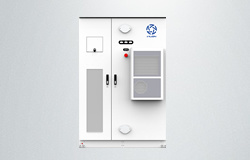
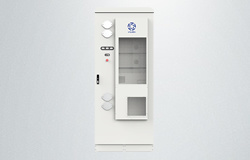
Battery ESSMaximize the value of renewables and energy storage by much safer and more professional products.
-
C&I SolutionsLaying the efficient, flexible and economical "smart energy sponge" with energy storage technology to realize green energy to flow on demand.
-
Technology & ServicePursuing a new energy world driven by technological innovation in the electricity and IoT.
-
About VilionIndependent R&D, system integration, software development, O&M and dismantling&recycling, Vilion is a full life cycle partner.






2024-07-13
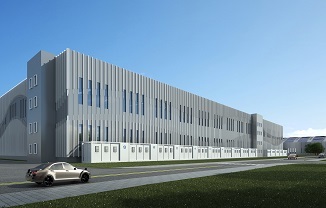
Energy Storage Knowledge Class| C&I Application Scenarios: Industrial Park + Energy Storage
With the continuous advancements in energy storage technology and the decreasing prices of lithium batteries, the cost of battery energy storage systems (ESS) is gradually decreasing, which highlights the increasing economic viability of battery energy storage applications in the commercial and industrial (C&I) sectors.. According to relevant data, the annual average growth rate of global C&I energy storage from 2021 to 2023 reached 169%.
As one of the major consumers of energy, industrial parks often face the burden of high electricity costs. Additionally, they can suffer significant losses during power outages caused by grid overloads or other failures. In recent years, under the global consensus on "carbon reduction," many countries and regions have increasingly deployed renewable energy in their industrial parks. For example, solar panels are installed on rooftops or on the ground to generate power for park use. However, the power generation from these renewable sources is susceptible to seasonal and weather variations, resulting in volatility and uncertainty. This prevents renewable energy from reliably and consistently replacing traditional energy sources in providing a stable power supply to industrial parks.
Next, this article will discuss one of the typical application scenarios for C&I energy storage: Industrial Parks + Energy Storage.
Q
What is Industrial Park + Energy Storage?
A
As literally understood, Industrial Park + Energy Storage refers to deploying such energy systems within traditional industrial parks to address their specific energy needs and challenges. Traditional industrial parks typically feature a large number of equipment characterized by high power consumption, prolonged periods of high-load operation, and high energy consumption. Implementing ESS can help industrial parks balance electricity supply and demand, effectively manage energy fluctuations and peak-demand variations, ensure stable power supply, and optimize energy utilization efficiency.
Q
What are the prerequisites for configuring energy storage in industrial parks?
A
Time-of-Use (TOU) Tariff Policy: Industrial parks must adhere to local TOU tariff policies, with a significant price differential between peak and off-peak hours (recommended at least RMB 0.8 yuan /kWh in China). The larger the price difference between peak and off-peak electricity, the higher the returns for industrial park ESS that primarily rely on peak-valley arbitrage for their profitability.
Coverage of High-Load Periods: The electricity consumption pattern of users should cover peak periods. If electricity is primarily used at night, it may not be suitable for implementing an ESS.
Transformer Surplus Capacity of Transformers: During off-peak and normal load periods, there should be surplus capacity in transformers to accommodate charging of the ESS. If the transformer load rate in the park is high, it may not be feasible to install an ESS.
Annual Utilization Time of ESS: The system should be operational for more than 270 days annually to ensure its long-term stability and economic viability.
Q
What are the advantages of building ESS in industrial parks?
A
Cost Savings
Storing electricity during off-peak periods when prices are low and utilizing stored electricity during peak periods when prices are high, the peak-load shifting can significantly reduce electricity costs for industrial park enterprises.
Improve Power Quality and Stability
(1)Reduce Grid Pressure: Alleviating peak electricity demand during high-load periods within industrial parks, especially during daytime peaks for manufacturing enterprises. ESS can provide electricity during peak demand, reducing reliance on the grid and helping balance grid loads.
(2)Emergency Backup Power: During grid failures or power outages, ESS can serve as emergency power sources, ensuring continuous operation of critical equipment and systems in industrial parks.
Enhance Renewable Energy Utilization
(1)Optimize Energy Use: For industrial parks equipped with renewable energy, ESS can store surplus electricity generated from renewable sources such as solar and wind within industrial parks, smoothing power output and reducing waste, maximizing the utilization of renewable energy .
(2)Reduce Carbon Footprint: By increasing the efficiency of renewable energy utilization, industrial parks can reduce reliance on traditional fossil fuels and decrease their carbon emissions, promoting sustainable development.
Improve Energy Efficiency
(1)Capacity Management: ESS capacity management refers to the systematic planning, allocation, scheduling, and optimization of the system's capacity using scientific methods and technological tools. The goal is to ensure the system efficiently meets electricity demand while maximizing effectiveness and benefits. This involves utilizing historical electricity usage data and operational data from the storage system to analyze trends in e

2024-07-06
Energy Storage Knowledge Class | Global C&l Energy Storage Revenue Models
According to data released by the China Chemical and Physical Power Industry Association, the global commercial and industrial (C&I) energy storage market is expected to see an additional installed capacity of 11.5 GW by 2025. By then, the cumulative market size for global C&I energy storage is projected to reach RMB 19 to 24 billion yuan. However, in 2023, the newly added capacity for global C&I energy storage was only 1.8 GW. This indicates that the global C&I energy storage market will continue to experience explosive growth over the next two years.
For instance, in Europe, according to the TD Times Energy Storage Database's "2024 Global Energy Storage Industry Trend Forecast Report," the number of C&I enterprises exceeded 23 million in 2022. Assuming that 25% of these enterprises can install photovoltaic (PV) rooftops, the penetration rate of C&I PV storage is only 0.53%, and the penetration rate of C&I energy storage is even lower at 0.08%. This highlights the vast market potential for C&I energy storage in Europe.
The rapid development of C&I energy storage cannot be separated from its increasingly evident advantageous revenue models. It also requires active exploration by enterprise users and social capital to discover broader profit avenues, continuously enhancing the efficiency and benefits of C&I energy storage.
Currently, considering the major markets for global C&I energy storage, which include China, the United States, Japan, and Europe (with Germany as a representative), the primary revenue models for C&I energy storage are as follows:
01 Direct Subsidies
The revenue model of direct subsidies exists in several countries. For instance, in China, 10 provinces and 31 regions have introduced subsidy policies for C&I energy storage. These subsidies are primarily based on discharge volume, capacity, and investment. Additionally, in April 2023, the United States implemented the IRA Act, which includes the ITC (Investment Tax Credit) policy, providing significant subsidies for C&I energy storage.
02 Peak-load Shifting
Peak-load Shifting is the most common profit model for C&I energy storage, especially prevalent in many Chinese installations where it serves as the primary revenue source.
This model involves commercial and industrial users charging energy storage systems at lower off-peak electricity rates, storing electricity for later use. During peak or high-demand periods, the stored energy is discharged to supply the load, thereby reducing electricity costs, mitigating potential power interruptions due to grid constraints such as load shedding.
03 Demand-side Management
Demand-side management is also a common profit model in China's C&I energy storage sector.
Demand-side management controls the need for loads, ensuring that the maximum power required by a business does not exceed the contracted electricity capacity. Currently, the two-part tariff system includes electricity charges and basic fees. Basic fees are calculated in two ways: one based on the capacity of operational transformers, and the other based on the maximum demand recorded monthly by the electricity meter. Installing energy storage systems can reduce peak loads for customers, lower demand values, and thereby reduce capacity-related electricity charges for customers.
04 Energy Shifting
Photovoltaic (PV) combined with energy storage represents a typical scenario of energy shifting, widely applied in markets across China, the UK, Germany, and various parts of Europe.
Energy shifting in C&I energy storage refers to the process of storing electricity generated from renewable sources like solar and wind in storage systems and releasing it when needed to supply specific loads or the grid.
Due to the intermittent nature of solar photovoltaic (PV) generation, which depends on weather conditions, its electricity production fluctuates. When a PV system generates more electricity than is needed by C&I users, the excess electricity is sold to the grid at lower prices. Conversely, when sunlight is insufficient, businesses must purchase electricity from the grid at higher prices, leading to fluctuating energy costs.
By deploying energy storage systems, C&I users can store surplus electricity during periods of high PV output that exceeds their immediate needs. This stored energy can then be discharged from the battery storage system during times of insufficient PV generation to meet electricity demand. In this way, energy storage acts like an intelligent scheduler, smoothing out the supply and demand of electricity, increasing PV generation and integration rates, and ultimately maximizing cost savings on electricity consumption.
05 Demand Response
In the United States, the electricity market environment is highly open, currently leading globally in the number and variety of demand response programs implemented. In Northern Euro

2024-07-06
Daily Updates | EnerArk FAT Records
On July 4-5, 2024, an acceptance team from Suzhou visited Vilion's Shenzhen intelligent factory. Led by Vilion’s pre-sales technical engineers, they conducted the Factory Acceptance Test (FAT) for the EnerArk integrated outdoor battery energy storage cabinet scheduled for shipment.
During the acceptance process, the customer first conducted a detailed inspection of the product's appearance (including the nameplates, safety labels and equipment casing), internal structural design and various circuit interfaces. Accompanied by pre-sales and commissioning engineers, the customer then performed performance tests on the EnerArk system, including external communication, emergency shutdown, fire safety, grid-tied charging and discharging, and charge protection.
Upon successful completion of this FAT, the product will soon be shipped to the project site for peak-load shifting applications. By leveraging time-of-use tariff differences, it will help users save on electricity costs and engage in arbitrage. The BESS will also effectively smooth out the electricity usage curve, providing customers with a more cost-effective and stable power experience.

2024-06-30
Fire Drill | Vilion Actively Responds to the“Safety Production Month”
This June marks the 23rd National "Safety Production Month" in China, with the theme "Everyone Speaks Safety, Everyone Knows Emergency Response - Keep Life Channels Open." On June 28, 2024, Vilion conducted a fire drill at its Shenzhen intelligent factory for all employees. The drill aimed to enhance employees' safety awareness and sense of responsibility, emphasizing the importance of safety in production, equipping them with personal protection skills, and ensuring safety in both work and life.
The fire drill at Vilion Shenzhen intelligent factory was led by the Factory Director Mr. Wang. A professional safety consultant was invited to educate all employees on fire safety. The employees were also organized into six groups: Emergency Command, Rescue, Evacuation, Medical Aid, Communication, and Logistics Support. Then, they participated in a fire evacuation drill and were trained on the correct use of fire extinguishers, fire blankets, and other firefighting equipment, which emphasized the importance of safety and enhancing their safety awareness and first aid skills.
The invited safety consultant, who possesses extensive knowledge in safety and first aid experience, demonstrated the CPR (cardiopulmonary resuscitation) process on-site and taught the key points step by step. If you encounter someone experiencing sudden cardiac arrest in daily life, please follow these steps for rescue:
1、Assess the Scene
The first step, evaluate whether the scene is safe. Only when the environment is secure should you approach to assist the patient.
2、Check for Responsiveness
The second step, gently tap the patient's shoulders and loudly ask, "Hey, hey, are you okay?" to determine if there is any response.
3、Call for Help
The third step, if there are bystanders, instruct someone to call emergency services (120) and get an Automated External Defibrillator (AED) if available. If you are alone, call 120 yourself while beginning resuscitation efforts. If you don't have a phone, find one quickly and return to provide aid.
4、Check for Breathing
The forth step, look directly at the patient’s chest (after removing thick clothing) to see if there is any movement indicating breathing. The assessment should take 5-10 seconds, using “look, listen, and feel” techniques—watch the chest, listen for breath sounds, and feel for breath airflow.
5、Perform CPR
The fifth step, place your hands on the center of the patient's chest (on the sternum between the nipples) and perform hard (at least 5 cm deep) and fast compressions (100-120 times per minute) 30 times. Then open the patient’s airway and provide rescue breaths. Cover the patient’s mouth with yours, take a calm breath, and blow until you see the chest rise. Give 2 rescue breaths. Repeat this cycle of 30 compressions and 2 breaths for 5 cycles.
6、Reassess
The sixth step, after every 5 cycles of 30 compressions and 2 breaths, reassess the patient's consciousness and breathing. If there is improvement, stop CPR. If there is no improvement, continue until trained help or emergency personnel arrive.
Vilion is a comprehensive energy service company that independently produces battery storage products. The daily production process in our workshops involves close contact with batteries, where a single careless operation can lead to severe safety incidents. This fire drill included realistic simulations of battery short circuits and fires, allowing everyone to clearly understand that adherence to operational and safety procedures is fundamental to ensuring production safety.
Safety production is the top priority for Vilion. Through this "Safety Production Month" training and fire drill, everyone at Vilion has gained a deeper understanding of the importance of safety production. In the future, Vilion will continue to organize regular safety briefings and drills, working together with all employees to enhance safety awareness, create a safe and reliable work environment, and safeguard the health and well-being of everyone, as well as the company's sustainable development.

2024-06-30
Energy Storage Knowledge Class: Differences Between C&I Energy Storage and Large-Scale Storage
Currently, the global generation of renewable energy is continuously increasing. However, due to its significant variability, it is challenging to ensure a stable supply. The application of energy storage technology provides an effective solution to this issue, garnering attention from countries worldwide. Various policies have been introduced to promote the development of energy storage. For instance, the United States has implemented the Investment Tax Credit (ITC) for energy storage, Europe has introduced the Green New Deal, and various local governments in China have developed energy storage plans. These measures have positively contributed to the growth of the energy storage market.
According to the IEA (International Energy Agency), to facilitate the rapid deployment of new solar PV and wind power that is necessary to triple renewables, global energy storage capacity must increase sixfold to 1500 GW by 2030. Batteries account for 90% of the increase in storage in the Net Zero Emissions by 2050 (NZE) Scenario, rising 14-fold to 1200 GW by 2030. Battery energy storage shows great potential in the global energy storage sector.
Energy storage can be categorized based on application scenarios into power generation-side, grid-side, and user-side storage. Power generation-side and grid-side storage are also known as front-of-meter storage or large-scale storage, while user-side storage is referred to as behind-the-meter storage. User-side storage can be further divided into commercial and industrial (C&I) storage, and residential storage. Large-scale energy storage currently holds the majority market share globally. However, in the past two years, C&I energy storage has been gaining significant traction. In 2022, the global growth rate for C&I energy storage was only 14.58%, but by 2023, the newly installed capacity reached 1.8GW, marking a 115% year-over-year increase. The major markets for global C&I energy storage are concentrated in China, the United States, and Europe (with Germany being a notable representative). Vilion has focused on the R&D, production, sales, and service of C&I battery storage technology and products since its establishment in 2019. In addition to the domestic market, Vilion has successfully expanded into many European markets and established the local company in Europe.
In the following article, we will provide an overview of the differences between C&I energy storage and large-scale energy storage.
Definition of C&I Energy Storage:
C&I energy storage systems are primarily used in industrial and commercial settings such as factories, office parks, shopping malls, and hotels. Compared to large-scale storage systems, C&I systems have smaller capacities and typically use a single-cabinet format. These systems are highly integrated and feature a modular design.
Application Scenarios:
(1)Peak Shaving and Valley Filling: Store electricity during off-peak periods when prices are lower, and discharge during peak periods when prices are higher, reducing electricity costs.
(2)Backup Power: Provide emergency backup power during grid outages to ensure continuity of production and operations.
(3)Increase Renewable Energy Utilization: Combine with renewable energy sources such as solar and wind power to store excess electricity, enhancing energy utilization efficiency.
(4)Load Management: Balance the electrical load within the park, reducing pressure on the grid.
Characteristics
(1)Moderate Scale: Storage system capacities typically range from several hundred kWh to a few MWh.
(2)Flexible Deployment: The system design is adaptable to various power and capacity requirements.
(3)Cost-Effective: Quickly achieve return on investment through electricity cost savings and providing backup power.
Large-Scale Energy Storage Definition:
Large-scale energy storage systems generally refer to projects with significant capacity, primarily used for grid-level power regulation and stabilization, serving utilities and large power infrastructure. These products are typically structured as containerized systems, divided into DC-side systems and medium-voltage conversion systems.
Application Scenarios:
(1)Frequency Regulation: Rapidly respond to grid frequency fluctuations to maintain grid stability.
(2)Peak Shaving and Valley Filling: Provide power support during peak electricity demand periods and store excess electricity during low-demand periods.
(3)Backup Power Supply: Provide high-capacity backup power during large-scale blackouts or electricity shortages.
(4)Renewable Energy Integration Support: Smooth the output fluctuations of renewable energy sources such as wind and solar to facilitate their large-scale grid integration.
Char

2024-06-24
Quick Response | Live After-Sales Report from Vilion
Recently, Vilion’s after-sales team was invited to provide on-site technical support for the pre-operation commissioning of 8 previously delivered EnerArk units for a client in Sichuan Province. Upon receiving the official written invitation from the client, Vilion immediately dispatched a professional after-sales team, arriving at the project site within 10 hours.
The project is located in a remote town in Sichuan. When Vilion’s after-sales technical team arrived, the town was hosting a cultural event, and all nearby hotel accommodations were fully booked. After several setbacks, the team finally found a family-run guesthouse. Without taking time to lament the modest conditions, they quickly headed to the project site and immediately coordinated with the client's on-site personnel regarding the steps and plans for the energy storage system commissioning. Subsequently, with the support and guidance of Vilion’s professional technical team, the client conducted a step-by-step testing and commissioning of the energy storage system. This included, but was not limited to, testing functions such as external network ports, system charging and discharging, data verification, smoke detection and fire safety, and voltage freezing.
This project is equipped with 8 sets of EnerArk integrated outdoor battery energy storage cabinets, 1 PowerHub distribution cabinet, and an Energy Management System (EMS). It is designed for the regional peak-valley arbitrage based on the TOU tariff, where the storage batteries are charged by the utility grid during off-peak hours and discharge to the load during peak hours. The energy storage system can achieve one charge/discharge cycle per day, with a planned annual operation of no less than 350 days.
The after-sales technical support team at Vilion adheres to the service philosophy of "Integrity, Timeliness, Reliability, Localization", "Promises Made, Promises Kept"; Vilion’s after-sales service guarantees a response time of 30 minutes and on-site arrival within 10 hours within the Greater China region. Furthermore, Vilion have signed agreements with local after-sales service partners in key countries/regions including the UK, EU (the Netherlands, Germany, Italy, Sweden, etc.), South Africa, Australia, and Indonesia and promise a response time of 1 hour for these areas. Countries/regions with service stations globally can ensure on-site arrival within 24 hours.

2024-06-22
Daily Update | FAT On-Site Record
On June 19, 2024, Vilion welcomed an acceptance team from Hunan at its Shenzhen manufacturing plant. With the accompaniment of Vilion's pre-sales technical and sales representatives, the team conducted a FAT (Factory Acceptance Test) of the EnerArk integrated outdoor battery storage cabinet.
During the FAT (Factory Acceptance Test) process, the customer conducted a thorough inspection of the EnerArk's appearance, components, and construction to ensure the integrity of the storage cabinet. They also performed various performance tests based on the mutually agreed FAT outline, including system charge and discharge functionality, power control functionality, communication functionality, and cloud platform data upload functionality, to validate the equipment's performance under normal operating conditions.
After completing the FAT, EnerArk will be shipped to the project site to be used for regional peak-load shifting. This will ensure a stable power supply while significantly enhancing economic benefits.

2024-06-22
Live from INTERSOLAR Germany - Vilion’s 'Ener' Series Captivates the Audience
In June, Germany is not only hosting the European Cup football feast but also the Intersolar Europe event. On June 19, 2024, the Intersolar & EES Europe 2024 exhibition opened grandly at the New International Exhibition Center in Munich. This year's event features over 1,500 companies from 50 countries/regions, making it the world's largest and most influential solar energy trade fair, as well as Europe's largest professional battery energy storage exhibition.
According to data from EASE/Delta-EE, in 2023, the newly installed capacity of C&I energy storage in Europe was approximately 0.62 GWh, with Germany and the UK being the main markets. Building on the successful collaboration in previous C&I energy storage projects within the European spot market energy trading sector, Vilion has established a preliminary partnership with Bolt**ner. Bolt**ner, a leading project developer and energy trading firm in the Netherlands, is teaming up with Vilion at the Intersolar & EES Europe exhibition in Germany. This marks the beginning of a more in-depth and extensive cooperation between the two parties in the European C&I energy storage field.
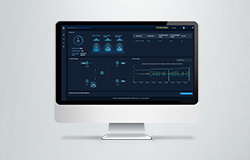
At the exhibition, Vilion unveiled its "Ener" series of battery energy storage products along with the "Vi" series energy management and intelligent O&M platform. These offerings attracted many attendees for discussions and consultations. The integrated hardware + software ESS solutions garnered significant attention and widespread approval from the guests. Currently, Vilion has successfully delivered energy storage projects to several European countries, including the UK, Germany, Sweden, the Netherlands, France, Spain, Luxembourg, etc.
Following the exhibitions at Poland's ENEX in February, Italy's Key Energy, and Sweden's ENERGIMÄSSAN in May, Germany's Intersolar marks Vilion's fourth exhibition in the European market this year. Each event not only serves as a platform to showcase the unique advantages of our latest products but also provides a valuable opportunity to engage closely with numerous potential customers and gather market feedback. Vilion is driven by market and customer needs, committed to promoting the innovation and iteration of energy storage products through technological advancements, and providing more innovative and high-quality green energy solutions and service experiences to customers in Europe and globally.
As this exhibition draws to a close, we invite you to join us next at Booth 69 at the Solar & Storage Live in Birmingham, UK, on September 24, 2024. See you there!

2024-06-19
EnerArk Unveils the Dutch 'Eco-Villa'
In March 2024, at Vilion's Shenzhen intelligent manufacturing factory, after successfully passing the Factory Acceptance Test (FAT), the EnerArk integrated outdoor battery energy storage cabinet has been shipped to the Netherlands and recently arrived at the project site in Rotterdam. Notably, upon the EnerArk arrival at its destination, the client placed a reorder with Vilion. This achievement owes greatly to the strong trust instilled in the customer through proactive communication and seamless product delivery by the sales and technical teams at Vilion during the early stages of the project.
EnerArk is one of the best-selling products in Vilion's C&I energy storage product line. Featuring a modular design with plug-and-play capabilities, it allows for flexible parallel expansion, making it suitable for various power and capacity C&I energy storage projects. It has obtained numerous global certifications, including but not limited to CE certification for the whole cabinet, VDE4105, G99, EN50549, UN3480, and UKCA. The product is sold in over 30 countries worldwide and has received high praise from customers, resulting in continuous reorders.
After arriving in the Rotterdam villa area, the EnerArk system is used for self-consumption of photovoltaic (PV) energy. Excess PV energy that is not immediately used by the load will be stored in the EnerArk BESS and released during peak load times, maximizing the self-consumption of the PV system. Additionally, the EnerArk is capable of directly storing surplus energy that the utility grid cannot accommodate, and then supplying it promptly when needed or integrating it into the grid at the proper time, thereby reducing waste caused by curtailment of PV system and blackout constraints, so as to assist the client in creating a sustainable green 'Eco-Villa'.
CONTACT US
Vilion (Shenzhen) New Energy Technology Co., Ltd
Add: Tower A, Building 1, Duocai Silicon Valley, No. 8 Juhe Road, Pingshan District, Shenzhen, China
Vilion Tech B. V.
Add: Fascinatio Boulevard 216 Unit 220, 3065WB Rotterdam
Vilion Tech (UK) Ltd
Add: Office 303B 10 Courtenay Rd., East Lane Business Park, Wembley, United Kingdom HA9 7ND


Copyright©2024 Vilion (Shenzhen) New Energy Technology Co., Ltd
